


 Australia
 Best Seller
 Label Printers
 All Thermal Labels
 Printer Accessories
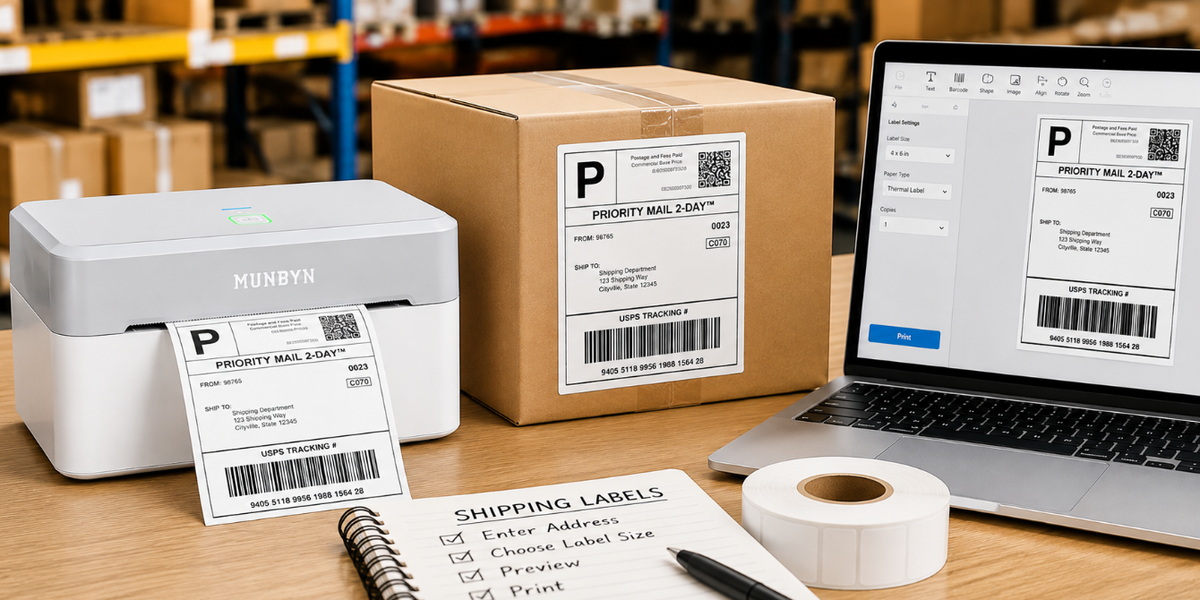
As e-commerce continues to evolve in 2026, smaller retailers now aim for localized micro-warehousing to survive big-box retail giants. The level of efficiency that used to be merely a luxury for business owners is now a survival tool. Yet, even one's most sophisticated online platform can be interrupted by something as insignificant as a hardware error: misaligned shipping labels, the horror, right? When labels are printed crooked, cut off, or completely blank, the result is not only the wastage of materials but also the delay in the shipment of products. For many entrepreneurs who are struggling to balance brand growth with logistics, it is such technical problems that distract them from their work. Knowing how your hardware operates is the first step towards regaining your efficiency and making sure that each item you send out bears a professional appearance.
Why Your Label Align Is Off
Misalignment happens when the printer's internal sensors and the physical media no longer talk to each other properly. Here, we look at the reasons why your labels could be drifting during a print job.
Whether you are running a normal desktop printer or a specialized thermal label printer, the precision of the print relies on the synchronization between the motor and the label sensor. Alignment issues are most of the time not signs of a broken machine but are rather caused by environmental factors or minor setting discrepancies. Dust, adhesive buildup, or simply a slight nudge to the paper guide can upset the delicate balance necessary for a perfect label alignment.
Common Causes of Hardware Drift
Small physical obstructions are frequently the primary culprits behind a failing label alignment. Even a tiny piece of label backing stuck in the roller can cause the paper to feed at an angle, leading to consistent errors.
|
Issue |
Potential Cause |
Immediate Solution |
|
Labels skipping |
Dirty Media Sensor |
Clean the sensor with isopropyl alcohol |
|
Text drifting off-center |
Loose Paper Guides |
Snug the guides against the label roll |
|
Partial printing |
Burned-out Printhead |
Check for physical damage or debris |
|
Continuous feeding |
Wrong Media Type |
Update settings to "Labels with Gaps" |
How to Calibrate a Label Printer for Perfect Results
Calibration is the process of teaching your printer the exact length of the label and the distance between the gaps. Mastering this skill ensures that every print starts and ends exactly where it should.
If you find that your printer is skipping labels or printing across the perforation, it is time to perform a calibration label printer routine. This reset allows the hardware to "re-learn" the boundaries of your media, which is especially important when switching between different label brands or sizes. While manual calibration varies by model, the core logic remains the same across most professional devices.
Running a Manual Calibration Label Printer Process
Most traditional thermal printers require a specific sequence of button presses to initiate the learning mode. To start a calibration label printer cycle, you usually hold the feed button until the status light flashes a specific number of times, signaling the device to measure the media.
-
Power Cycle: Turn the printer off and ensure the labels are loaded correctly under the guides.
-
Initiate Learn Mode: Hold the feed button while turning the power back on.
-
Observation: Watch as the printer feeds 2–3 labels to identify the gap or black mark.
-
Verification: Press the feed button once to see if exactly one label comes out.
Troubleshooting Common Software Settings for Label Align
Sometimes the hardware is functioning perfectly, but the instructions it receives from your computer are flawed. Software-based label alignment issues are common when using different shipping platforms or PDF generators.
Before assuming your printer has a mechanical fault, you should always verify that your digital "Canvas" matches your physical "media." If your computer thinks you are printing on a 4x6 label but you have 2x2 labels loaded, the label alignment will never be correct. Checking the "Printing Preferences" in your Windows or Mac settings is a vital step in any troubleshooting workflow.
Adjusting Driver Properties for Better Label Align
The printer driver acts as the translator between your design software and the hardware. Within the driver settings, you can manually define the dimensions to ensure the label alignment remains consistent across various batches.
Most modern drivers allow you to create custom "Stocks" or "Forms." By saving a specific profile for each label size you use, you reduce the risk of a calibration label printer error. Ensure that the "Unprintable Area" is set to zero to prevent the driver from adding unnecessary margins that shift your design.
Why MUNBYN DAC Technology Prevents Misalignment
Modern innovation has led to the development of smarter hardware that handles the heavy lifting of calibration for you. MUNBYN has integrated advanced features to support busy entrepreneurs who cannot afford to waste time on manual troubleshooting.
The RealWriter 405B Bluetooth Thermal Label Printer is a prime example of how technology can simplify logistics. Instead of requiring a manual calibration label printer sequence every time you change rolls, these devices utilize DAC (Dynamic Auto-Calibration) technology. This system ensures automatic paper alignment and accuracy by sensing the media properties the moment the lid is closed.

The Benefits of Automatic Size Recognition
Automatic recognition means the printer identifies the edges of your labels without user intervention. This drastically improves the label alignment accuracy for various shapes, including circles, rectangles, and small jewelry tags.
-
Zero Manual Setup: The printer adjusts to the width and length of the label instantly.
-
Reduced Waste: No need to run multiple "test labels" to find the gap.
-
Versatility: Seamlessly switch between shipping labels and branding stickers.
Maintenance Tips for Consistent Label Align
A clean printer is a reliable printer. Regular maintenance prevents the build-up of residues that interfere with the sensors responsible for correct label alignment.
You should make it a habit to clean your print head and sensors every time you replace a roll of labels. This simple act prevents the sensor from becoming "blind" to the gaps between labels, which is a leading cause of a failed calibration label printer attempt. Use a lint-free cloth and 99% isopropyl alcohol to gently wipe the sensors located along the paper path.
Professional Cleaning Checklist
Keeping your equipment in top shape ensures that your label alignment remains perfect for years. This is especially important for high-volume sellers who process hundreds of orders daily.
-
Inspect the Platen Roller: Ensure there is no adhesive stuck to the black rubber roller.
-
Clear the Media Path: Remove any paper dust or scraps from the internal housing.
-
Wipe the Sensors: Locate the transmissive or reflective sensors and ensure they are clear of debris.
-
Test the Feed: Regularly press the feed button to ensure the paper exits straight.
Optimizing Your Workflow with Advanced Hardware
Choosing the right tools can eliminate many of the technical headaches associated with e-commerce logistics. Investing in a high-quality label printer, like MUNBYN thermal label printers, allows you to focus on your customers rather than your hardware.
For entrepreneurs and small business owners, the goal is to have a "plug and play" experience. When your equipment features automatic calibration label printer capabilities, you remove a significant barrier to shipping efficiency. Reliable hardware ensures that your branding remains consistent and your professional image stays intact with every package delivered.
Selecting the Right Printer for Your Business
When browsing for new equipment, look for features that specifically address the common pain points of thermal printing. A printer that supports both USB and Bluetooth connectivity provides the flexibility needed for a modern home office or warehouse.
-
Speed: Look for printers that can handle at least 150mm/s to keep up with peak seasons.
-
Compatibility: Ensure the device works with all major shipping platforms like Shopify, Etsy, and UPS.
-
Technology: Prioritize DAC technology and automatic alignment to save on long-term costs.

Final Thoughts
Fixing alignment problems on a label printer involves a mix of effective hardware upkeep and setting the printer software correctly. By figuring out how to adjust your label printer and keeping the printer's media path clean, you will be able to fix 90% of the usual printing errors. To cover the other 10%, you can count on smart technologies such as MUNBYN's automatic alignment systems, which serve as a backup that helps your business run without delays. (Ready to upgrade your workflow? Use code “MYSEO” at checkout and enjoy an extra 8% off all MUNBYN products—limited time only!)
Moving away from manually figuring things out to a system that works automatically and efficiently is a big step for a brand that's growing. When you enlarge your business, you should still concentrate on your products and community, rather than spending time and energy on a misaligned label. Armed with the right understanding and equipment, you can make sure that every parcel that goes out from your end stands as proof of your professionalism and eye for detail. Getting your label alignment right is not only a technical solution; it is also a way of committing to the trustworthiness of your brand's promise to customers.
Share:
How to Pick the Right Printer for E-Commerce Orders
Logo Sticker Design Guide for Small Businesses